

How to Avoid Pre Workout Jitters: A Step-by-Step Guide
Table of Contents
- Why Pre Workout Jitters Happen (and How to Spot Them)
- How Much Caffeine in Pre-Workout Is Actually Causing Your Jitters?
- Pre-Workout Dosage for Beginners: Start With a Half Scoop
- How Long Do Pre-Workout Jitters Last (and What to Do When They Start)
- Caffeine Timing, Food, and Absorption: Small Changes That Stop the Shakes
- Caffeine-Free Pre-Workout: Who Should Switch and What to Expect
- How to Choose a Pre-Workout That Won't Leave You Shaking
- Conclusion
- Frequently Asked Questions
Last Updated: October 19, 2026
Why Pre Workout Jitters Happen (and How to Spot Them)
Pre workout jitters are the racing heart, shaky hands, and restless buzz that hit some people after a scoop of pre-workout. They almost always trace back to stimulants, mainly caffeine, hitting a nervous system that wasn't ready for that dose.
Here's the frustrating part: most labels don't make dosing easy. A "serving" can mean one scoop or two, and the caffeine number on the front rarely tells you what's per scoop versus per container. So people scoop blind, then wonder why their hands are trembling on the bench.
Common signs of pre workout jitters include:
- Rapid heartbeat or a pounding chest
- Shaky hands and restless legs
- Anxiety or a wired, on-edge feeling
- Trouble focusing on your set
- Sweating more than the workout explains
Sound familiar? Keep reading. We'll walk through the exact steps to stop it, starting with the number that matters most.
How Much Caffeine in Pre-Workout Is Actually Causing Your Jitters?
The answer depends on your tolerance, but the caffeine content in pre-workout is the usual suspect. Many formulas pack a full day's stimulant load into a single scoop. The FDA guidance on caffeine and health notes that most adults can handle moderate caffeine, but sensitivity varies widely from person to person.
So how much is too much? Check the label and do the math per scoop, not per container. Then compare that number to what you drink elsewhere.
The 150-250 mg Zone vs. the 300+ mg Danger Zone
Think of caffeine dose in two bands:
| Caffeine Per Scoop | Who It Suits | Jitter Risk |
|---|---|---|
| 150-250 mg | Most beginners and moderate users | Low to moderate |
| 250-300 mg | Regular caffeine users | Moderate |
| 300+ mg | High-tolerance users only | High |
If you're new to stimulants, stay in the lower band. If you're hitting 300 mg or more and shaking, that's your sign to cut back.
A Practical Caffeine Dosing Guide by Sensitivity and Body Size
Most practitioners find that a useful starting point is roughly 3 mg of caffeine per kilogram of body weight for a single pre-workout dose, with a common range of about 2-6 mg/kg depending on tolerance. For a 70 kg (154 lb) adult, that works out to roughly 140-420 mg per dose, a wide range that explains why one scoop can feel mild to one person and overwhelming to another. Rather than chasing a universal number, use these bands as a starting framework and adjust from there:
- Low sensitivity (no jitters at typical doses): A single serving in the 200-300 mg range is often tolerable, but still check total daily intake.
- Moderate sensitivity (occasional restlessness or racing heart): Start at 100-150 mg per dose and hold for at least a week before increasing.
- High sensitivity (jitters at low doses, anxiety-prone, or new to stimulants): Begin at 50-100 mg per dose, or choose a stimulant-free formula entirely.
Two numbers matter more than the one on the tub: your single-serving dose and your total daily caffeine. A 200 mg scoop is moderate on its own, but if you also drink two coffees (roughly 95 mg each) and a cola (about 35 mg), you're already near 425 mg for the day before you train.
Individual responses vary widely due to genetics, tolerance, medications, sleep, and even hydration status. A dose that feels fine on a well-rested day can hit harder after poor sleep or on an empty stomach. Treat any dosing guide as a starting point, not a prescription, and adjust based on how you actually feel.
Pre-Workout Dosage for Beginners: Start With a Half Scoop
Beginners should start with a half scoop, not a full one. This single habit prevents more jitter complaints than any other change. Your body needs time to build tolerance, and a half scoop lets you test the waters without flooding your system.
Here's the sequence we recommend:
- Read the label and note caffeine per scoop.
- Start with a half scoop mixed in more water than directed.
- Train as normal and note how you feel.
- Hold that dose for a week before changing anything.
- Increase slowly only if you feel nothing at all.
Mix your half scoop in 350-400 ml of water instead of the usual 200-250 ml. The extra volume slows absorption slightly and takes the edge off the initial rush.
The Quarter-Scoop Test: Finding Your Tolerance Ceiling
Sensitive to stimulants? Start at a quarter scoop. This is the tolerance ceiling test: begin tiny, add a little each session, and stop at the dose just before jitters appear. That number is your personal ceiling. Write it down. It's the most useful number in your supplement routine.
How Long Do Pre-Workout Jitters Last (and What to Do When They Start)
Pre-workout jitters usually fade within 30 to 90 minutes as your body processes the caffeine. The peak hits roughly 30 to 60 minutes after you drink it. If you're shaking right now, here's a step-by-step response plan:
High Stem Pre-Workout Cotton Candy Apple Lemonade →
- Stop sipping. Don't finish the shaker. Every additional sip adds to the load already in your system.
- Drink water. Hydration supports how your body clears stimulants, and it gives you something calm to do while you wait.
- Walk it off. Light movement, a slow lap around the gym or a few minutes on the treadmill, burns off the restless energy without spiking your heart rate further.
- Breathe slowly. Box breathing (inhale 4 seconds, hold 4, exhale 4, hold 4) helps calm a racing heart and settle the wired feeling.
- Eat something small. A snack with some carbohydrate and protein can soften the spike and settle your stomach.
- Sit out the intense sets. Swap heavy compounds for lighter accessory work until the feeling passes. Pushing a max lift while your heart is pounding is a bad trade.
Jitters vs. Tingling vs. Something More Serious
Not every weird feeling after pre-workout is a jitter. Knowing the difference helps you respond correctly:
- Caffeine jitters: racing or pounding heart, shaky hands, restlessness, anxiety, trouble focusing. These typically peak within an hour and fade over 30-90 minutes.
- Beta-alanine tingling (paresthesia): a harmless pins-and-needles or itching sensation on the skin, usually starting 15-30 minutes after ingestion and fading within an hour. It does not involve a racing heart or chest discomfort. If your skin is prickling but your chest feels normal, that's beta-alanine, not jitters.
- Symptoms that warrant medical attention: chest pain or pressure, fainting, severe shortness of breath, a heart rate that stays very high at rest, or jitters accompanied by vomiting or confusion. These are not typical pre-workout jitters, stop training and seek medical help.
If you have a cardiovascular condition, an anxiety disorder, are pregnant, are under 18, or take medications that interact with stimulants, talk to a healthcare professional before using caffeinated pre-workout at all. This is not a case for trial and error.
Caffeine Timing, Food, and Absorption: Small Changes That Stop the Shakes
When you take your pre-workout changes how hard it hits. Caffeine absorbs fast on an empty stomach, which means a bigger spike and more jitters. Take it with a small snack, or at least 30 minutes after eating, and the curve flattens.
Timing matters too. Aim to finish your scoop 30 to 45 minutes before training. Taking it too early leaves you buzzing before you lift; too late and it peaks mid-session. Also, cut caffeine from coffee, tea, and energy drinks on training days. Those sources stack on top of your scoop and push you into the danger zone without you noticing.
Caffeine-Free Pre-Workout: Who Should Switch and What to Expect
A caffeine-free pre-workout is the right call for anyone who shakes at low doses, trains in the evening, or takes medication that interacts with stimulants. These formulas rely on ingredients like beta-alanine and citrulline for pump and endurance, without the stimulant load.
What to expect: less of a "hit," more of a steady drive. You won't get the wired rush, but you also won't crash. If you're stimulant-sensitive, this is worth trying before you give up on pre-workout entirely.
If jitters keep coming back at half a scoop, switch to a stimulant-free formula rather than pushing through. Fighting your own nervous system is a losing game.
How to Choose a Pre-Workout That Won't Leave You Shaking
Choose a pre-workout with a clear caffeine number per scoop, no proprietary blends, and a dose you can actually halve. Transparency is everything here. If the label hides the caffeine content behind a "blend," you can't control your dose, and you can't avoid jitters.
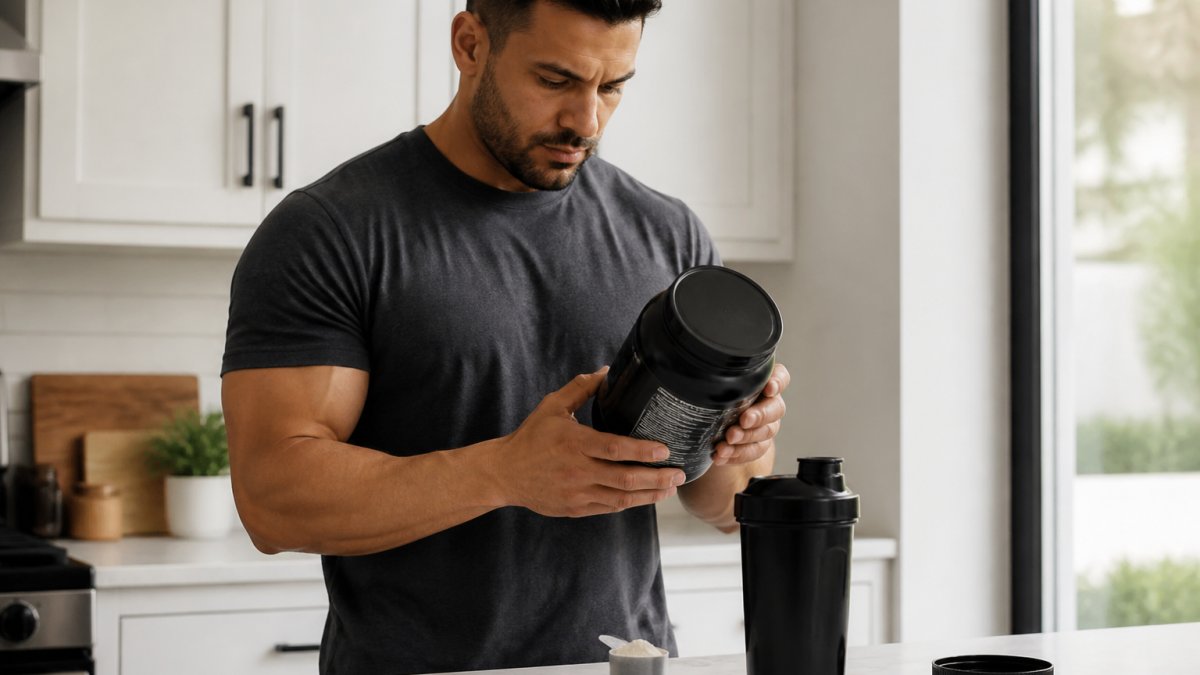
This is where our own formula matters. Truculent FAFO's High Stem Pre-Workout uses the TerraCaf formula with fully disclosed dosing, so you know exactly what you're taking per scoop. You can check the full breakdown on the High Stem Pre-Workout Cotton Candy Apple Lemonade page before you commit.

Quick label checklist:
- Caffeine listed per scoop, not per container
- No proprietary blends
- Serving size you can split easily
- Beta-alanine dose stated (it causes tingling, not jitters)
- Stimulant-free option available
One more thing: don't confuse tingling with jitters. Beta-alanine causes a harmless pins-and-needles feeling, not a racing heart. If your chest is pounding, that's stimulants. If your skin is prickling, that's beta-alanine, and it's normal.
Conclusion
The jitters aren't a mystery, and they aren't something you have to tolerate. Start with a half scoop, check your caffeine per scoop, time it right, and cut the coffee on training days. If your body still pushes back, a transparent formula makes all the difference. Truculent FAFO built its pre-workout around disclosed dosing, crash-free energy, and recovery support, so you can dial in your dose without guesswork. Get started with Truculent FAFO and train hard without the shakes.
Frequently Asked Questions
Why do I feel so weird after pre-workout?
That weird feeling usually comes from a high caffeine dose hitting an empty stomach, sometimes combined with beta-alanine tingling. Caffeine blocks adenosine receptors and spikes adrenaline, which can cause restlessness, a racing heart, and anxiety. Check your label: many pre-workouts pack 300 mg or more per scoop, close to three cups of coffee. Try a half scoop, take it with food, and drink water. If the sensation includes itching or prickling under the skin, that is beta-alanine, not caffeine, and it fades within 60-90 minutes.
How much caffeine in pre-workout can cause jitters?
Jitters typically start above 200-250 mg of caffeine for most people, though sensitivity varies widely. A 150-250 mg dose is a moderate range that suits many regular gym-goers, while 300 mg or more pushes into the zone where restlessness and a racing heart become common. Beginners and anyone who drinks little coffee should stay at the lower end. Always read the label: a full scoop can contain 350 mg or more, so a half scoop is often the smarter starting point.
How long do pre-workout jitters last?
Most pre-workout jitters peak 30-60 minutes after drinking and fade within 2-4 hours, depending on your caffeine tolerance and the dose. Caffeine has a half-life of roughly 3-5 hours, so a 200 mg dose can still leave about 100 mg in your system after 4 hours. If jitters hit hard, stop drinking the rest, sip water, eat a small snack, and avoid adding coffee or energy drinks. For next time, reduce the scoop size or switch to a lower-caffeine formula.
Can I avoid jitters by using a caffeine-free pre-workout?
Yes. A caffeine-free pre-workout removes the main trigger for jitters, restlessness, and a racing heart, making it a solid choice for evening training or anyone sensitive to stimulants. You still get benefits from ingredients like citrulline for pumps and beta-alanine for endurance, though beta-alanine can cause harmless tingling. If you want some energy without the shakes, a lower-caffeine option in the 150-250 mg range is a middle ground. Match the product to your training time and tolerance.