

Best Pre Workout for Powerlifters 2026: Top Picks
Table of Contents
- Best Pre Workout for Powerlifters in 2026: Quick Comparison
- Pre-Workout Ingredients for Powerlifting: What Actually Moves Weight
- Truculent FAFO High Stem: The Strongest Pre Workout for Powerlifters
- Truculent FAFO Sweet-N-Sour Watermelon and Bulked-Up Blue Razz
- How Long Before a Workout to Take Pre-Workout for Max Effort Sets
- Pre-Workout for Powerlifting Competition: Meet-Day Protocols
- Third-Party Tested Pre-Workout Supplements and Drug-Free Sport
- Conclusion: Choosing Your Pre Workout for Powerlifters
- Frequently Asked Questions
Last Updated: October 7, 2026
Best Pre Workout for Powerlifters in 2026: Quick Comparison
The best pre workout for powerlifters 2026 comes down to one question: does it still work when you're three hours into a meet and need one more max attempt? Most formulas fail that test. They're built for 45-minute gym sessions, not five-hour competitions where your nervous system gets torched before your third lift.
Below, we break down what actually moves weight, how to time your dose, and which products fit which training goal.
Quick Picks:
- Best Overall: Truculent FAFO High Stem ($45.00), highest stimulant load for true max-effort work
- Best Flavored Options: Truculent FAFO Sweet-N-Sour Watermelon and Bulked-Up Blue Razz ($39.99 each), same formula, easier to drink
- Best for Meet Day: Lower-dose caffeine, timed 45-60 minutes out
- Best for Drug-Tested Lifters: Third-party tested products only
| Product | Price | Stimulant Level | Best For |
|---|---|---|---|
| High Stem Cotton Candy Apple Lemonade | $45.00 | High-stim | Max effort, heavy singles |
| Sweet-N-Sour Watermelon | $39.99 | High-stim | Volume blocks, training days |
| Bulked-Up Blue Razz | $39.99 | High-stim | Long sessions, endurance |
Pre-Workout Ingredients for Powerlifting: What Actually Moves Weight
Pre-workout ingredients for powerlifting fall into four working categories: stimulants for nervous system drive, beta-alanine for heavy-set endurance, citrulline and nitrates for blood flow, and betaine or taurine for strength output. Everything else is flavoring, filler, or marketing.

What separates a formula that helps a max-effort squat from one that just makes you tingle is the dose. Below is what the evidence actually supports, with the dose ranges most commonly studied, so you can read a label and know whether a product is real or theater.
- Caffeine, the most reliable performance aid in the category. It raises force output and reduces perceived effort on heavy sets. Studied performance doses generally fall in the 3-6 mg/kg bodyweight range, taken 45-60 minutes before training. For a 90 kg lifter that is roughly 270-540 mg. More is not better: past your personal tolerance, caffeine adds jitters and heart rate without adding kilos.
- Beta-alanine, buffers acid buildup across repeated heavy attempts, which is exactly the demand of a squat-bench-deadlift session or a meet. The performance effect comes from chronic loading, not a single scoop: the commonly studied protocol is roughly 3.2-6.4 g per day for several weeks to raise muscle carnosine. A pre-workout that lists 1-2 g is a tingle, not a dose. Tingling (paresthesia) is harmless and fades with regular use.
- Citrulline, supports blood flow and pump. It will not add kilos to your total, but it can improve session quality and reduce next-day soreness. Studied doses are typically 6-8 g of L-citrulline or roughly 8-10 g of citrulline malate. Many labels underdose this badly because it is expensive and bulky.
- Creatine, the most studied strength supplement available. Timing is less important than daily consistency; 3-5 g per day, every day, is the standard. A pre-workout is a convenient delivery vehicle, not a magic window.
- Betaine (trimethylglycine), modest support for strength and power output. Studied doses are commonly around 2.5 g per day, and the effect builds with consistent use rather than a single serving.
- Taurine, supports hydration and may blunt some caffeine jitters. Doses in the 1-2 g range are common. Useful, not transformative.
- Nitrates (from beetroot), a separate pathway from citrulline for blood flow and muscular efficiency. Dosing is less standardized and results vary, so treat nitrate products as a nice-to-have rather than a core powerlifting ingredient.
Truculent FAFO High Stem: The Strongest Pre Workout for Powerlifters
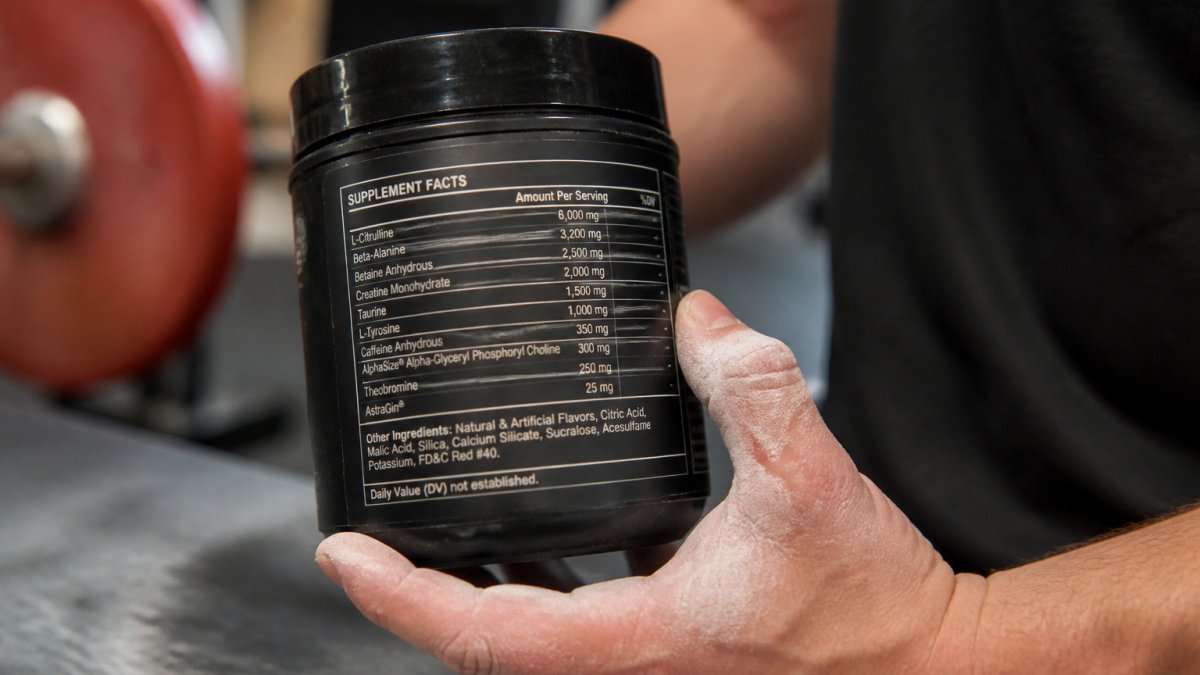
If you want the strongest pre workout for powerlifters, High Stem is our top pick. It's built on our TerraCaf formula with a high-stimulant load designed for max-effort singles, not casual sessions.
What sets it apart is transparency. Every ingredient is dosed openly on the label, no hidden blends. You get crash-free energy, laser focus, and insane pumps from a single scoop, plus anti-inflammatory recovery support.
The Cotton Candy Apple Lemonade flavor runs $45.00. It's the highest-stimulant option we make, so start with a half scoop if you're caffeine-sensitive.
Truculent FAFO Sweet-N-Sour Watermelon and Bulked-Up Blue Razz
Not every training day calls for maximum voltage. Our Sweet-N-Sour Watermelon and Bulked-Up Blue Razz deliver the same high-performance formula at $39.99, with flavors that are easier to drink across a full training block.

Both boost energy and endurance while sharpening focus and mental clarity.
Use these on volume days, accessory work, or any session where you want the drive without the intensity of High Stem.
How Long Before a Workout to Take Pre-Workout for Max Effort Sets
How long before a workout to take pre-workout depends on your stimulant tolerance, the size of the dose, and how long your session runs. For most lifters, 30 to 45 minutes before your first heavy set is the sweet spot, but that single number hides the variables that actually decide whether you peak on your top single or crash during warm-ups.
The mechanism. Caffeine reaches peak blood concentration roughly 45 to 60 minutes after you drink it, and its half-life is commonly cited as around 5 hours, meaning a meaningful amount is still circulating long after your session ends. Beta-alanine tingling starts within 15 to 20 minutes and is a timing signal, not a performance signal. If you take your scoop too early, you peak during warm-ups and fade before your top set.
A practical timing framework:
- Light or technique session: 20-30 minutes out, half scoop. You want focus, not voltage.
- Standard training day: 30-45 minutes out, full scoop. This is the default for most lifters.
- Max effort day (heavy singles): 45-60 minutes out, full scoop, sipped slowly rather than slammed. This lets caffeine peak as you approach your top attempt.
- Long sessions (2+ hours): split the dose. Take roughly two-thirds 45 minutes out and the remainder about 90 minutes in, so you are not running on fumes for your last heavy set.
- Meet day: see the competition section below, the protocol is different because the clock runs for hours.
Evening lifters and sleep. Caffeine's long half-life is the real problem for anyone training after work. A 300 mg dose at 6 p.m. can still leave a meaningful amount in your system at midnight. A common pattern is to cap caffeine intake by early afternoon, use a lower-stim or stimulant-free product for evening sessions, and protect sleep, because sleep is the actual recovery driver for strength.
Tolerance and the dose trap. Caffeine tolerance builds fast. If a full scoop stops working, the fix is a tolerance break, commonly a week or two of reduced intake, not a bigger dose. Chasing the effect with more caffeine raises side effects (jitters, elevated heart rate, digestive upset) faster than it raises performance.
High Stem Pre-Workout Cotton Candy Apple Lemonade →
Stimulant-sensitive lifters. If you are sensitive to caffeine, start with a half scoop, take it 45 minutes out, and pair it with a stimulant-free product for the beta-alanine and citrulline. You can get the endurance and blood-flow benefits without the nervous system load.
Pre-Workout for Powerlifting Competition: Meet-Day Protocols
Pre-workout for powerlifting competition is a different game than training day. You're on the clock for hours, and peaking too early can wreck your third attempts.
On meet day, take a smaller dose than you would in training. Caffeine's peak effect hits hardest when you're not already fatigued, so a reduced scoop 45 minutes before your opener keeps you sharp through the middle of the day without the crash.
Keep a second, smaller serving for after your second attempt if you're fading. Bring your own shaker and water. Venue concessions rarely have what you need.
Third-Party Tested Pre-Workout Supplements and Drug-Free Sport
Third-party tested pre-workout supplements matter if you compete in a drug-tested federation. Contaminated products can trigger a failed test even when you didn't knowingly take a banned substance.
Look for products that carry independent batch testing and clear certification. Check that the certification body is recognized by your federation, and verify the batch number on your specific tub, not just the brand's marketing page.
For drug-free athletes, the checklist is short:
- Independent third-party certification on the label
- Batch-specific test results available
- Full ingredient disclosure, no proprietary blends
- No ingredients on your federation's banned list
For more on anti-doping standards, see the World Anti-Doping Agency prohibited list. The FDA's guidance on dietary supplement labeling also explains what manufacturers must disclose.
Conclusion: Choosing Your Pre Workout for Powerlifters
The hard part isn't finding a pre-workout. It's finding one that still works on your heaviest day, without a crash two hours later.
Our TerraCaf formula delivers crash-free energy, laser focus, and anti-inflammatory recovery support in one scoop, with every dose printed openly on the label. No proprietary blends, no guesswork.
Start with High Stem for max-effort days, or Sweet-N-Sour Watermelon and Bulked-Up Blue Razz for everything else. Get started with Truculent FAFO and train like your next PR depends on it.

Frequently Asked Questions
What is the best pre-workout for powerlifters in 2026?
The best pre-workout for powerlifters depends on your stimulant tolerance and training goal. For heavy max-effort sessions, a high-stimulant formula like Truculent FAFO High Stem ($45) delivers the energy and focus needed for maximal attempts. If you train later in the day or compete in tested sport, a lower-stim or stimulant-free option may suit you better. Look for transparent dosing, no proprietary blends, and ingredients backed by evidence for strength output.
What ingredients should powerlifters look for in a pre-workout?
Prioritize ingredients with evidence for strength and power: creatine monohydrate (3-5g), beta-alanine (3.2g for endurance across heavy sets), citrulline (6-8g for blood flow and pump), betaine (2.5g), and caffeine (200-400mg based on tolerance). Taurine and nitrates from beetroot also support performance. Avoid proprietary blends that hide doses. Truculent FAFO publishes exact dosages so you know what you are taking before you commit to a heavy session.
How long before lifting should you take pre-workout?
Take pre-workout 20-30 minutes before your first working set. Caffeine peaks in your bloodstream around 30-60 minutes after ingestion, so timing matters for max-effort attempts. If your session starts with heavy squats or deadlifts, take it 25-30 minutes out so the stimulant and pump ingredients are active when you unrack.
Can you take pre-workout before a powerlifting meet?
Yes, but test it in training first. Never try a new pre-workout on meet day. Use the exact product and dose you have used for at least 4-6 weeks of heavy sessions. Take it 30-45 minutes before your opening attempt, not before warm-ups, so the peak hits when you are on the platform. If you compete in a drug-tested federation, verify third-party testing and batch certificates before you commit.
Are stimulant-free pre-workouts effective for strength training?
Stimulant-free formulas still support strength through citrulline, beta-alanine, betaine, and creatine. They will not deliver the same alertness as caffeine, but they avoid jitters, sleep disruption, and the crash that follows high-stim products. Powerlifters who train in the evening or have built a high caffeine tolerance often rotate to stimulant-free options to keep sensitivity high for meet day.